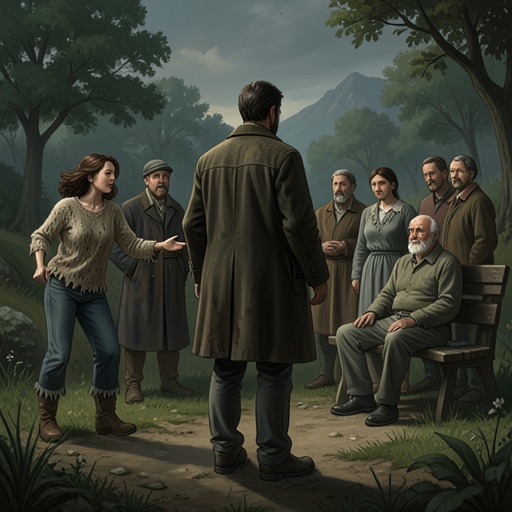
Gracie Graham
How to Flirt with A Naked WerewolfGracie Graham is Cooper Graham’s mother and a significant figure in the Graham family’s domestic and emotional life. She first appears to Mo as an immediately comforting presence after Mo is injured, but her importance extends beyond hospitality: Gracie understands the damage caused by Cooper’s departure, recognizes the unresolved bond between Cooper and Maggie Graham, and protects Cooper’s right to tell his own story. Through food, touch, apology, and family memory, she gives the Graham household a humane counterweight to the pack’s violence and hierarchy.
Identity and Family Presence
Gracie is presented as soft, round, warmly smiling, and associated with a meticulously clean, orderly home. The room where Mo wakes contains childhood photographs of Cooper, Maggie Graham, and Samson Graham, while three carved wooden wolves stand on the mantel beside the fireplace. These details make the household a place where the family’s history remains visible and where wolf identity is represented through domestic objects rather than only through danger or combat.
Her physical warmth is matched by her manner. When Mo returns to consciousness after being struck, Gracie welcomes her back, tends the injury beneath her eye with a strong-smelling yellow salve, and apologizes for Maggie’s behavior. Gracie explains that Maggie has been angry since Cooper left and that even repeated attempts to help her control herself have failed. Her apology does not erase Maggie’s responsibility, but it frames the attack as part of a family rupture rather than treating Mo as an intruder who deserves punishment.
Care for Mo
Gracie’s care becomes practical as soon as Mo wakes. She offers to prepare breakfast, and when Mo insists on cooking because the activity will settle her nerves, Gracie accepts the choice despite having gone without sleep. She makes coffee while Samson and she watch Mo prepare sautéed onions, peppers, garlic, and eggs in the orderly kitchen. The scene turns recovery into an act of participation: Mo is not merely a wounded outsider being observed, but a guest allowed to contribute to the household.
Gracie also receives Mo’s intervention on Cooper’s behalf with visible gratitude. Mo had resisted Maggie’s attack because she could not watch Maggie go after Cooper, even though doing so left her injured. Gracie responds with a warm, gratified smile, recognizing that Mo’s action reflects genuine attachment rather than casual involvement with her son. Her care therefore moves in both directions: she protects Mo physically while acknowledging Mo’s protective feeling toward Cooper.
Memory, Conflict, and Disclosure
The family photographs allow Gracie to describe the closeness between Cooper and Maggie as children. She recalls that Maggie loved her brother intensely and that Cooper tolerated his younger sister’s constant presence unusually well. The photographs show Maggie beside Cooper, often with his arm around her shoulders, making the later hostility more difficult to understand. Gracie does not reduce the siblings’ conflict to simple hatred; she preserves the earlier affection that the adult rupture has obscured.
When Mo asks why Maggie cannot forgive Cooper, Gracie refuses to disclose the answer herself. She says quietly that Cooper should be the one to tell Mo. This decision is important because Gracie possesses family knowledge but does not use it to control the narrative. Her restraint protects Cooper’s agency while also signaling that his departure carries a serious history. The interruption of the conversation by Eli further emphasizes the tension between domestic openness and pack secrets.
Gracie’s family role is also connected to the pack’s wider structure. Cooper explains that an alpha leads the village, makes decisions for the pack and its families, and directs responses to threats. Gracie belongs to the family system shaped by those obligations, yet her conduct is grounded in care rather than command. Her household demonstrates how pack life is sustained not only by authority and defense but also by cooking, tending wounds, preserving photographs, and caring for exhausted relatives.
Relationship to Cooper’s Trauma
Gracie’s presence helps reveal what Cooper’s departure cost the family. Cooper had once been expected to become his generation’s alpha, but after killing twelve wolves from an invading pack to save Maggie and defend the valley, he was consumed by guilt, nightmares, and distrust of himself. He believed he had killed people and no longer deserved his family. Gracie’s account of Maggie’s anger confirms that his absence altered the family’s emotional order, even though the household still contains evidence of their earlier closeness.
Her request that Mo remain for the afternoon, nap, and shower before returning to the road shows another form of protection. Gracie tries to delay Mo’s departure after the violent encounter, offering rest instead of interrogation. When Cooper refuses and gently presses his forehead to his mother’s cheek before leaving, the gesture reveals continued affection beneath the family’s strain. Gracie cannot resolve Cooper’s guilt or Maggie’s resentment, but she provides a setting in which tenderness remains possible.
Narrative Role and Significance
Gracie functions as a bridge between the intimate family and the dangerous pack. She does not appear as a fighter or political leader; her authority comes through caregiving, memory, and emotional recognition. Her apology for Maggie, her willingness to feed Mo, and her insistence that Cooper speak for himself all challenge a purely militarized understanding of the wolf community.
Her household also prepares the ground for Mo’s deeper acceptance of Cooper. In Gracie’s care, Mo encounters the people and objects behind the frightening wolf identity: childhood photographs, family stories, a clean kitchen, coffee before dawn, and a mother who is exhausted but still ready to make breakfast. Gracie thereby helps transform Cooper from an isolated and potentially dangerous figure into a son whose violence, shame, loyalty, and longing belong to a recognizable family history.
Although Gracie is not present in the later decision that Cooper will marry Mo and raise their baby with her, that outcome develops within the family-centered world she represents. The Graham tradition joins love to protection, continuity, and collective responsibility. Gracie’s role is to make that tradition tangible without idealizing it: her family shelters its own, but it also carries anger, secrecy, grief, and the consequences of violence.